
13 Recipes for Savory Crepes
As an Amazon affiliate, I earn from qualifying purchases.
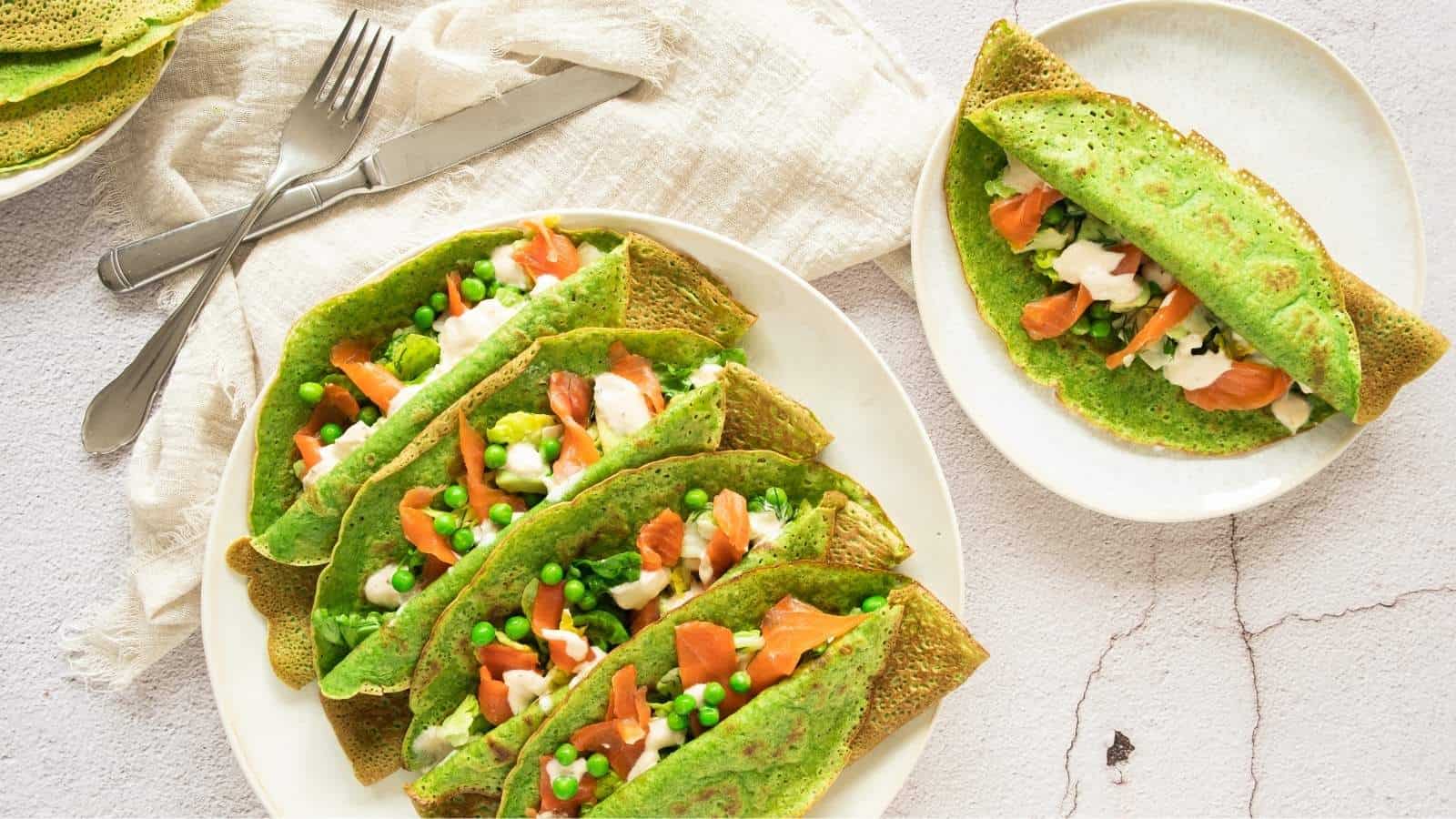
When most people think of crêpes, they picture something sweet: powdered sugar, a swirl of Nutella, maybe some fresh strawberries. But in France, crêpes (including their heartier buckwheat version, the galette) are just as often a savory main course. I love them for that reason: a thin crêpe is really just a vessel, so fill it with ham and cheese, leftover chicken, or roasted vegetables, and you've got a meal for breakfast, lunch, or dinner.
This roundup collects 13 of my favorite savory crêpe recipes, from classic French bistro combinations to a few unexpected fillings. Whether you're after a quick weeknight dinner or something a little more special for brunch with guests, there's a crêpe here for you.

What are Savory Crêpes?
A savory crêpe is the same thin, delicate pancake used for dessert crêpes, just filled with something other than fruit or chocolate: cheese, meat, vegetables, eggs, or seafood instead of sugar. In France, the most traditional savory version isn't technically a crêpe at all, it's a galette: a buckwheat-flour pancake from Brittany that's naturally more savory-tasting than its wheat-flour, sweet counterpart.
Either way, think of a savory crêpe as a French take on a wrap or an omelet: a thin base that lets a good filling be the star.
What You'll Love About These Crêpes
- They work for breakfast, lunch, or dinner, not just one meal.
- Both the batter and most fillings can be made ahead.
- There's something here for vegetarians, meat lovers, and seafood fans alike.
- They look impressive but come together with pantry basics and a skillet.
Crêpe Basics
Start here if you've never made crêpes before. These three base recipes can be the foundation for almost every filled crepe, whether you are gluten-free, dairy-free, or not.



Vegetarian Savory Crêpe Recipes
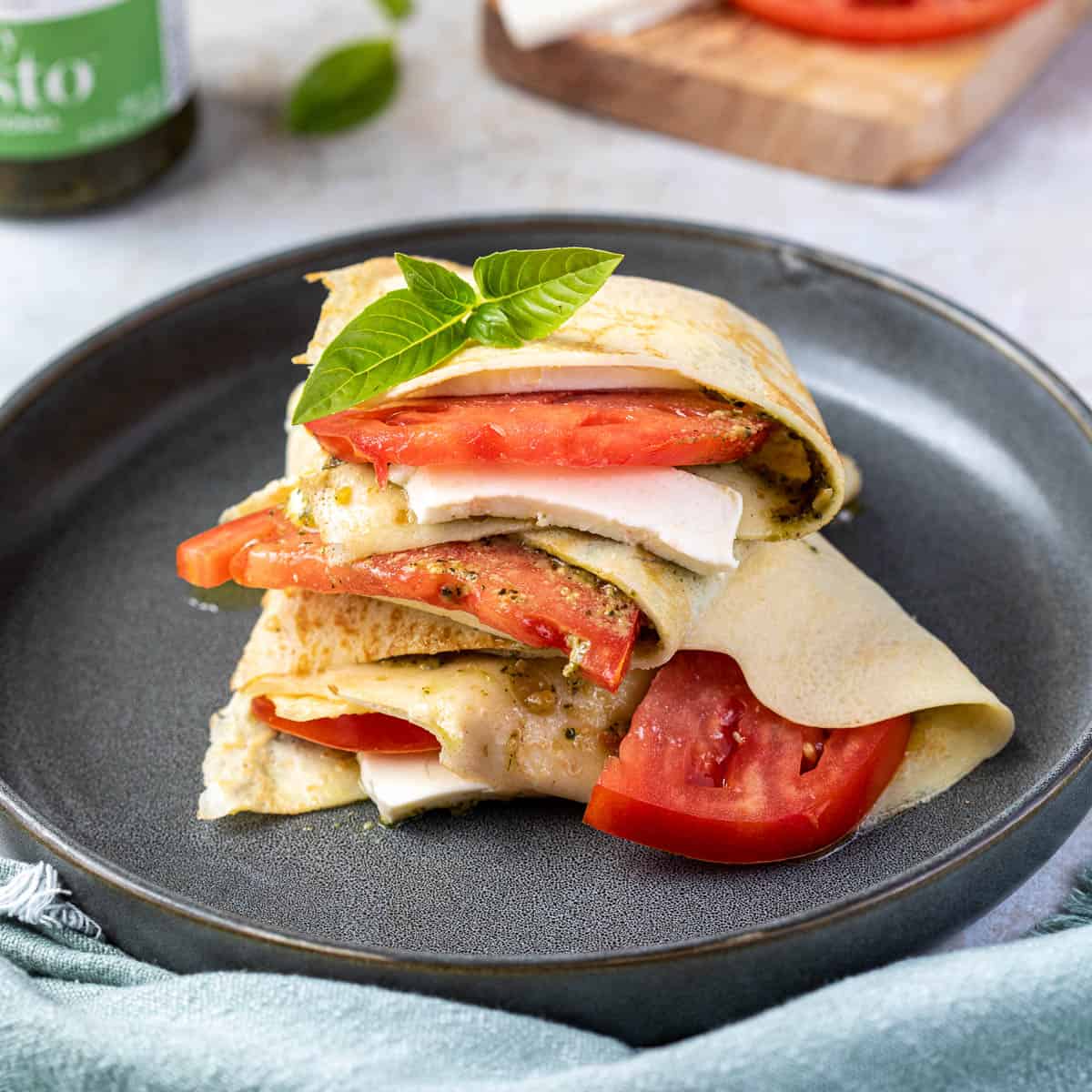
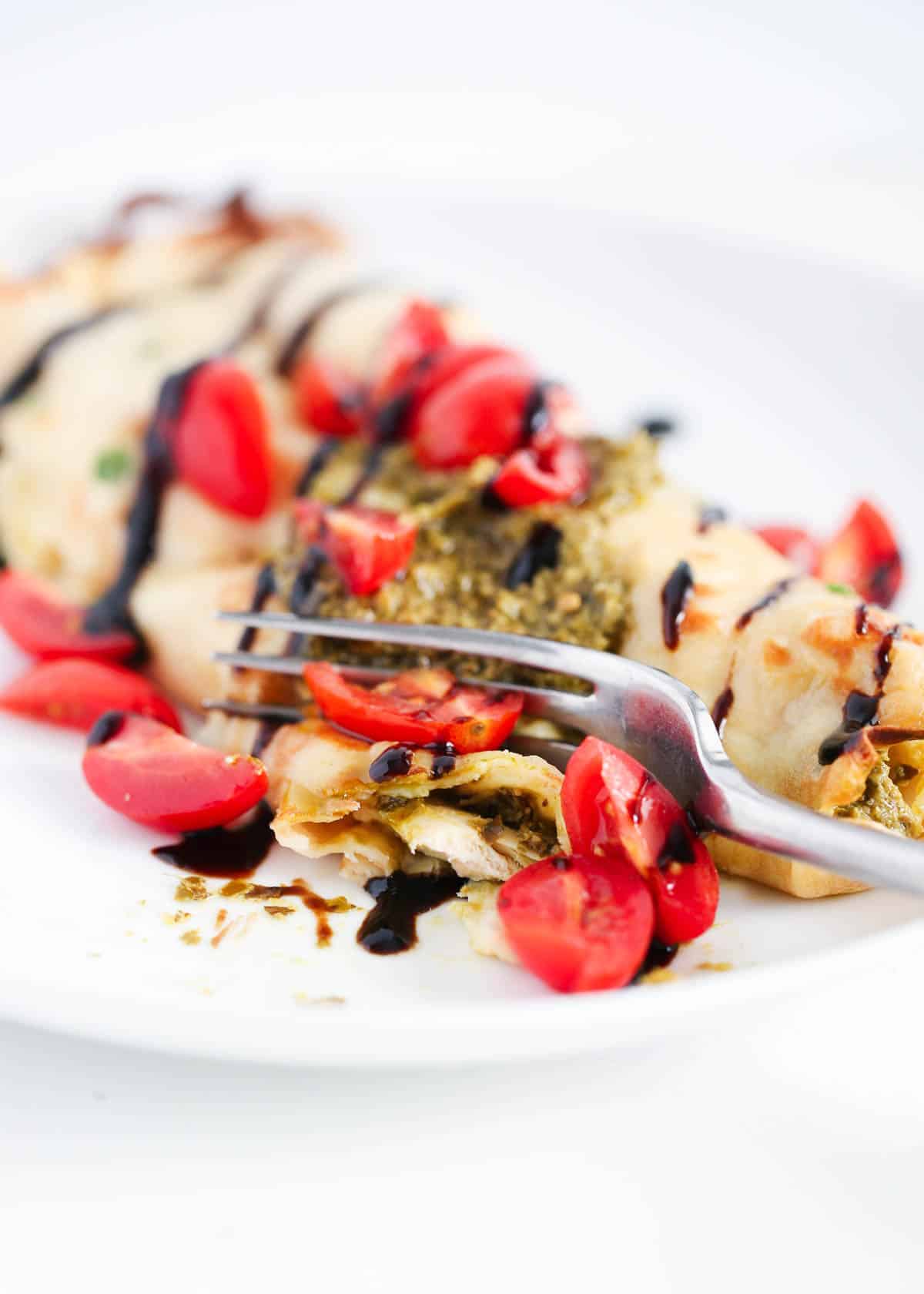
Now for a few meat-free options. Try a new version of a caprese salad or a simple egg-and-cheese breakfast crêpe. Whether you're cooking for a vegetarian guest or just want a lighter meal, these prove a savory crêpe doesn't need meat to feel like a full meal.


Chicken, Seafood & Meat Savory Crepes
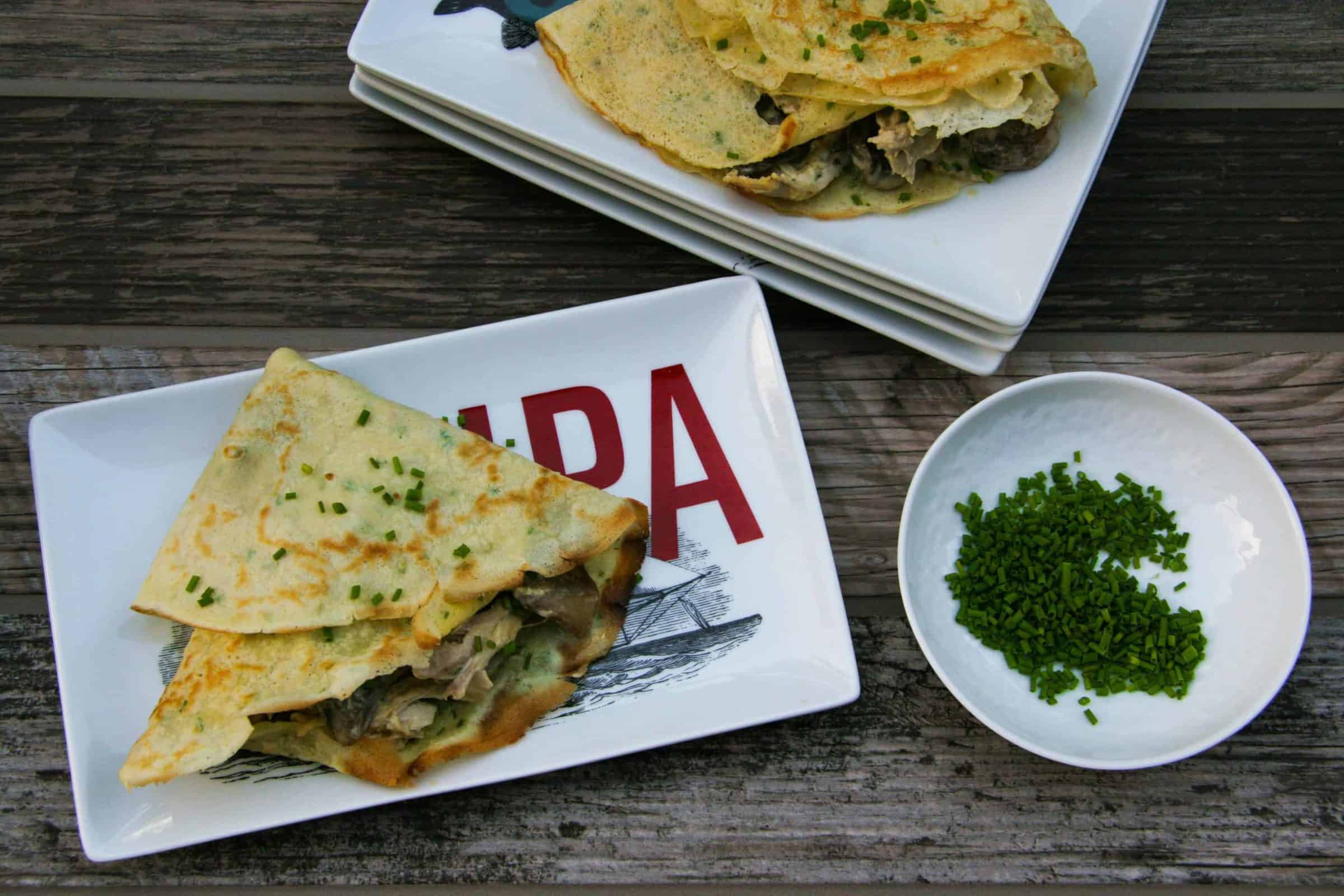
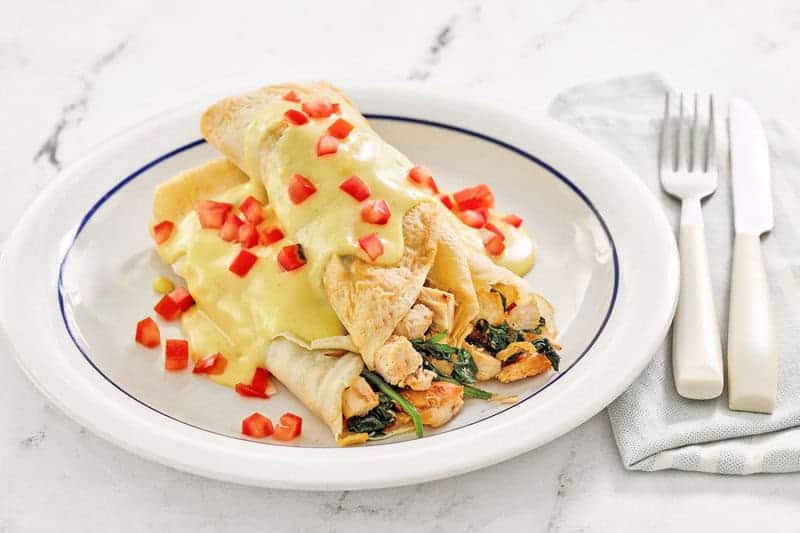
These are the heartier fillings on the list, built for when a crêpe needs to carry the whole meal. You'll find a couple of creamy chicken dishes, a classic ham and cheese option, and even a creative take on huevos rancheros. Good for a weeknight dinner or a brunch spread when eggs alone won't cut it.



Recommended Tools for Savory Crepe Recipes
- Crêpe pan or a good nonstick 10-inch skillet: a dedicated crêpe pan has shallow sides that make spreading and flipping easier, but a nonstick skillet works fine.
- Blender: the fastest way to get a smooth, lump-free batter.
- Wooden crêpe spreader and spatula: often come in a set. A good crepe turner makes flipping delicate crêpes much less stressful.
- ¼-cup measuring cup or small ladle: for portioning consistent amounts of batter.
Top Savory Crepe Tips
- Let the batter rest at least 30 minutes (an hour is better) before cooking; it relaxes the gluten and gives you a more tender crêpe.
- Batter should be thin, close to the consistency of heavy cream. Too thick, and the crêpes turn out more like pancakes.
- Cook over medium heat, not high. High heat browns the outside before the crêpe fully sets.
- Lightly butter or oil the pan between crêpes, but wipe out any excess so they don't fry.
- Don't judge yourself by the first crêpe. It's almost always a throwaway while the pan finds its heat.
- Warm your filling before assembling so the finished crêpe isn't cold in the middle.
- Don't overfill. A thin layer folds and rolls neatly; too much filling tears the crêpe.
- Keep finished crêpes warm under a clean kitchen towel or in a low oven while you finish the batch.
Storing and Reheating Savory Breakfast Crepes
- Store cooled, unfilled crêpes stacked with parchment or wax paper between them in an airtight container or bag in the fridge for 3 to 4 days.
- Freeze the same way for up to 2 months; thaw in the fridge before reheating.
- Reheat empty crêpes in a dry skillet over medium-low heat, or wrapped in foil in a 300°F oven. You can also microwave them gently on 50% power, but note that blasting them in the microwave often turns crêpes rubbery.
- For filled crêpes, reheat covered in foil in the oven so the filling warms through without the crêpe drying out or turning tough.
Savory Crepe Ideas FAQs
In France, savory crêpes (a specialty of Brittany) are traditionally called galettes and made with buckwheat flour instead of wheat flour. The most classic version, a galette complète, is filled with ham, a fried egg, and cheese, folded into a square right in the pan. Sweet crêpes, by contrast, are made with wheat flour.
No. A crêpe pan has shallow sides and a wide, flat surface that make spreading the batter thin and flipping a little easier, but a good nonstick skillet works fine, especially if you're just making a batch for your own kitchen.
Yes. Crêpes reheat well, which makes them a good make-ahead option. See the storing and reheating section above for how long they'll keep and how to reheat them without turning rubbery.

More About Molly

Cooking healthy(ish) meals with seasonal ingredients is my passion. Trained as a French pastry chef, I spent over 10 years as a personal chef. Here you'll find well-tested recipes that you and your family will love!